Carmilla — Edition Insights
Edition facts
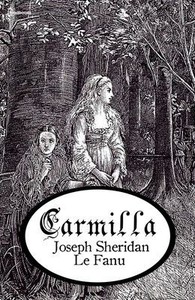
Joseph Sheridan Le Fanu's Carmilla opens with a prologue that frames the narrative as a manuscript edited by Doctor Hesselius, a device that immediately establishes a layer of scholarly distance. The story is told by Laura, a young Englishwoman living in a Styrian castle, whose voice is marked by a blend of domestic detail and Gothic unease. From the first chapter, Le Fanu's diction oscillates between the mundane—'a small income, in that part of the world, goes a great way'—and the ominous, as when Laura recalls an early fright involving a mysterious visitor in her childhood. This contrast between the ordinary and the supernatural is central to the novella's effect.
Narrative Voice and Framing
The story is presented as a first-person account by Laura, but it is introduced by an unnamed editor who references Doctor Hesselius's essay on the 'profoundest arcana of our dual existence.' This framing creates a tension between the personal, emotional testimony and a pseudo-scientific analysis. Laura's narration is careful and particular, as the editor notes her 'conscientious particularity.' Her language is often measured, even when describing disturbing events, which heightens the uncanny atmosphere. For instance, when Carmilla disappears and reappears, Laura's confusion is expressed through precise questions: 'How could all this have happened without my being wakened?' The voice remains that of a rational observer trying to make sense of irrational occurrences.
Setting and Atmosphere
Le Fanu establishes the setting with deliberate specificity: a schloss in Styria, with a moat, swans, water lilies, and a Gothic chapel. The description is picturesque but also isolating: 'Nothing can be more picturesque or solitary.' The castle's secret passages are hinted at by the old housekeeper, adding a layer of hidden architecture. The landscape is not merely decorative; it functions as a source of both beauty and threat. The forest opens into a glade before the gate, but the road is 'very old and narrow,' and the bridge is steep. This duality mirrors the narrative's movement between safety and danger. The setting's isolation is emphasized by the family's modest income—'eight or nine hundred a year does wonders'—which grounds the Gothic in economic reality.
Dialogue and Character Interaction
Dialogue in Carmilla often carries subtext, especially in exchanges between Laura and Carmilla. Carmilla's speech is evasive and layered with double meanings. When questioned about her disappearance, she says, 'Last night has been a night of wonders,' and later claims her story is 'simply one of bewilderment and darkness.' Her responses deflect direct inquiry while maintaining a veneer of innocence. Laura's father, by contrast, speaks with directness and concern, asking pointed questions. The dynamic between the characters is revealed through these verbal exchanges: Carmilla's slyness is noted in a 'sly, dark glance' that follows Laura's father. Le Fanu uses dialogue to advance the mystery without explicit exposition, leaving the reader to interpret the characters' intentions.
Recurring Motifs and Structural Patterns
Several motifs recur throughout the excerpts: locked doors, secret passages, and the contrast between sleep and wakefulness. Carmilla's disappearance involves locked doors that remain secured from the inside, a puzzle that Laura's father tries to solve. The motif of the 'secret passages' is introduced but never fully explained in the excerpts, creating a sense of unresolved mystery. Another pattern is the emphasis on physical boundaries—the moat, the drawbridge, the locked doors—which are repeatedly breached. The narrative structure itself mirrors this: each chapter advances the mystery but withholds full revelation. The prologue's promise of a 'precis' that is withheld sets the tone for a story that is as much about what is not said as what is revealed.
Readers attentive to Le Fanu's authorial choices will notice how the novella builds its horror through accumulation of detail rather than overt action. The narrator's reliability is never fully questioned, yet her perceptions are limited, leaving gaps for the reader to fill. Pay attention to the moments when Carmilla's language shifts from affectionate to ambiguous, and how the setting's tranquility is undercut by small, discordant notes. These elements reward close reading and make Carmilla a precursor to later psychological horror.