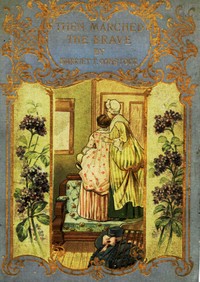
Then Marched the Brave — Reading Companion
Edition facts
From its first chapter, Then Marched the Brave establishes a protagonist defined by limitation and perception. Andy McNeal is introduced as a lame sixteen-year-old whose mother, Janie, sees his disability as a mark of cowardice, unable to conceive of bravery beyond physical strength. The narrative voice, however, signals a gap between Janie's view and the reader's: Andy's eyes grow steely and his lips draw into firm lines when he hears of the king's soldiers' doings. This early tension—between a mother's disappointment and a boy's hidden resolve—sets the stage for a story that tests courage in unconventional forms.
Opening: A Mother's Blindness and a Boy's Hidden Steel
The opening excerpt introduces Janie McNeal as a woman of rigid loyalties and deep shame that her only son cannot be a living sacrifice to the cause of freedom. The narration explicitly states that she cannot conceive of a bravery beyond physical strength, and she sees only cowardice in Andy's shrinking features. Yet the same paragraph reveals that Andy's eyes grow steely and his lips draw into firm lines when he listens to the doings of the king's soldiers. This juxtaposition is the novel's first lesson: the reader is invited to see what Janie cannot. The mother's perspective is not the final truth; the boy's inner life is signaled through physical detail—the steely eyes, the firm lips—that contradicts her assessment. A first reading should attend to these small bodily cues, as they recur throughout the text as markers of Andy's true character.
Middle: The Cave, the Captivity, and the Quickened Pace
The middle excerpt shifts from domestic tension to action. Andy is captured by British soldiers who recognize him from an earlier incident in a secret passage. The dialogue is rapid and fragmented: accusations fly, a soldier named Martin identifies him, and Andy is forced to lead a mounted troop. The scene is notable for its compression—within a few paragraphs, Andy is prodded with a bayonet, given a chance to speak, and then makes a dash for freedom. The narrative uses short, staccato sentences to convey urgency: “He’s gone!” “Which way?” “Which way!” The reader is placed inside Andy's perspective as he rolls into a muddy pool and hides. The excerpt also introduces a new threat: the mention of a schoolmaster to be hanged as a spy. This moment of overheard danger propels Andy from mere escape into a mission of rescue, suggesting that the novel's middle section will test his courage not in battle but in stealth and endurance.
Later: The Weight of a Name and the Shape of a Mission
The later excerpt deepens the stakes. Andy, hiding in the underbrush, fixates on the words “schoolmaster” and “spy.” The narrative slows to match his stillness: “Still Andy sat staring into the awful possibility that the words conjured up.” The repetition of “Schoolmaster! Spy!” in his thoughts underscores the shift from physical danger to moral urgency. The text does not confirm the identity of the schoolmaster, but Andy's reaction—crawling up the bank, clinging to his crutch—shows that he is now driven by a purpose beyond self-preservation. The crutch, earlier a symbol of limitation, becomes a tool he clings to even in flight. A first reader should note how the novel uses Andy's physical disability not as a flaw to be overcome but as a constant condition that shapes his actions. The later excerpt suggests that the climax will hinge on intelligence and sacrifice rather than conventional heroism.
Voice and Structure: The Narrator's Distance and the Reader's Closeness
Throughout the excerpts, the narrator maintains a measured, almost reportorial tone, but occasionally slips into free indirect discourse that aligns the reader with Andy's thoughts. For example, after Andy hears the soldiers' talk, the text reads: “Suppose! Andy sat up and gazed wildly into the dense underbrush. ‘Could it be?’ But no; the idea was too horrible.” The exclamation points and the fragment “Suppose!” convey his alarm without explicit narration. The structure of the excerpts also reveals a pattern: each section ends with a question or a decision that propels the next action. The opening ends with Andy shrinking from his mother's pity; the middle ends with Andy smiling grimly in hiding; the later ends with him crawling up the bank. This rhythm of tension, pause, and renewed action is characteristic of the novel's pacing. A first reading benefits from noticing how each chapter closes on a note of unresolved suspense, inviting the reader to continue.
Readers approaching Then Marched the Brave for the first time will find a story that rewards attention to small physical details—the steely eyes, the crutch, the mud of the brook—as indicators of character. The novel does not announce its themes; it embeds them in action and dialogue. The excerpts suggest that Andy's bravery is not the absence of fear but the persistence of purpose despite limitation. The narrative's structure, with its alternating domestic and military scenes, keeps the focus on the boy's choices rather than on grand historical events. Let the text's own pacing guide you: when it slows, watch for a shift in Andy's understanding; when it quickens, follow the physical movement.