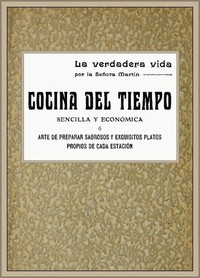
Cocina del tiempo, ó arte de preparar sabrosos y exquisitos platos propios de…

(5 User reviews)   579
Ruiz Contreras, Luis, 1863-1953 Ruiz Contreras, Luis, 1863-1953
Spanish
Ever wonder what people really ate a hundred years ago? Not the fancy royal banquets, but what regular families cooked in their kitchens? That's the magic of this book. It's not just recipes – it's a time capsule. Luis Ruiz Contreras wrote this guide in the early 1900s, and it captures a whole world of flavors and habits that were about to change forever. Reading it feels like finding your great-grandmother's secret recipe box, filled with handwritten notes for dishes you've never heard of. It's a direct line to the smells and tastes of another era. If you love food history or just enjoy a good kitchen story, this is a fascinating peek into the past.
Share

Read "Cocina del tiempo, ó arte de preparar sabrosos y exquisitos platos propios de…" Online

This book is available in the public domain. Start reading the digital edition below.

START READING FULL BOOK
Instant Access    Mobile Friendly

Book Preview

A short preview of the book’s content is shown below to give you an idea of its style and themes.

adobado.--Chocha al jerez.--Manzanas á la inglesa.--Dulce de naranja. FEBRERO Langosta en salsa tártara.--Ostras.--Langostinos á la vinagreta.--Calamares rellenos.--Calandrias trufadas.--Sandwich.--Jamón en dulce.--Pudín.--Queso holandés. MARZO Tortilla de espárragos.--Muselina de bacalao.--Potaje de espinacas.--Puré de cangrejos.--Congrio guisado.--Croquetas de salmón.--Rodaballo en salsa.--Crema frita.--Torrijas.--Almejas á la marinera.--Ensalada rusa. ABRIL Pastelillos de foigrás.--Lenguado al gratín.--Raya á la marsellesa.--Patatas á la francesa.--Galleta de patata.--Pote provinciano.--Pollo con setas.--Pepitoria de gallina.--Frito de lechuga.--Ensalada española.--Huevos al plato.--Crema de café.--Ensalada de naranja.--Budín de patatas.--Gelatina de fresa.--Varias maneras de comer la fresa.--Mermelada de fresa. MAYO Codornices asadas.--Codornices guisadas.--Menestra.--Pierna de carnero con coles de Bruselas.--Alcachofas rellenas.--Guisantes á la inglesa.--Cordero con guisantes.--Espárragos con mayonesa.--Espárragos á la inglesa.--Puntas de espárragos con jamón.--Empanadillas de escabeche.--Empanada de manzana.--Gelatina de naranja.--Empanadillas dulces. JUNIO Chuletas de ternera á la papillot.--Cochifrito.--Pato guisado.--Tomates rellenos.--Fritada de pollos.--Pimientos rellenos.--Dulce de guindas.--Guindas en aguardiente.--Compota de albaricoques.--Dulce de tomate.--Flan de albaricoques. JULIO Truchas rellenas.--Anguilas en salsa blanca.--Carpas aliñadas.--Ancas de rana.--Berenjenas rellenas.--Judías verdes guisadas.--Arroz con pollos tiernos.--Gazpacho.--Jalea de ciruelas.--Dulce de higos. AGOSTO Gazapos al natural.--Conejos en parrilla.--Ajo blanco.--Conservas.--Tarta de albaricoque.--Mermelada de albaricoque.--Queso de frutas, helado.--Helado de melocotón ó de fresa. SEPTIEMBRE Arroz con pájaros.--Gazpacho de cazador.--Morcillo de ternera á la italiana.--Bacalao con patatas nuevas.--Pato con aceitunas.--Tortilla al jerez.--Jalea de uvas.--Carne de membrillo.--Arrope.--Tortilla souflé. OCTUBRE Lechón á la española.--Besugo asado.--Caldereta.--Sardinas en cazuela.--Lebrato salteado.--Cardo guisado.--Judías guisadas.--Compota de castañas.--Castañas glassés.--Buding de castañas.--Castañas á la asturiana. NOVIEMBRE Manteca y chicharrones en conserva.--Cabeza de cerdo en fiambre.--Queso de cerdo.--Salchichón.--Butifarra de sangre. DICIEMBRE Lombarda con salchicha.--Gachas.--Pavo relleno.--Arroz de retazos.--Foigrás á la española.--Cochinillo ó tostón en galantina.--Sopa imperial.--Plum-Pudding.--Dulce de batata. ENERO ==Morteruelo manchego== Dos perdices. Una gallina ó medio pavo. Dos kilos de hígado de cerdo. Medio kilo de jamón de Avilés. Una libreta. Después de bien limpios todos los ingredientes, y partidas por medio las aves, se ponen á cocer con agua y sal. Cuando esté bien tierno, se saca del agua, se deshuesan las aves y se pica todo, tanto, que parezca machacado. Se cuela el caldo á otra vasija, colocando en él el picadillo, dos kilos y medio de manteca de cerdo derretida, ciento veinticinco gramos de buen pimentón encarnado, una cucharadita de pimienta negra molida y un polvo de clavo de especia. Se remueve sin cesar con el cucharón de madera. Cuando empieza la grasa á hacer burbujas y sube á la superficie, está terminada la operación y puede colocarse el morteruelo en tarros de loza, que se tapan como los de dulce, con papel blanco primero y después con un pergamino bien atado. Este morteruelo se conserva cuanto tiempo se desee, siempre que esté bien tapado, y se sirve como plato frío ó caliente con huevos fritos alrededor. _Coste aproximado, 12 pesetas._ ==Lomo de cerdo con judías== Un kilo de lomo. Medio kilo de judías blancas. Doscientos gramos de manteca de cerdo. Se espolvorea el lomo con sal y pimienta; se cubre bien con la manteca y se pone al horno. Cuando el tenedor entra y sale con suma facilidad, está en su punto. Las judías, que habrán estado en agua cuatro horas, se cuecen en agua fría con una cebolla partida y unos gramos de pimienta, cuidando que no se deshagan. Una vez cocidas y escurrida el agua, se echan en la grasa del lomo, una media hora antes de comer para que se rehoguen bien. _Coste aproximado, 3,90 pesetas._ ==Butifarra catalana== Cuatro kilos de carne de cerdo. Tripas de cerdo de las más anchas. La carne de cerdo debe tener una tercera parte de gorda; se pica bien picada, se sazona con sal y pimienta negra molida, se amasa perfectamente, se deja descansar una hora, se vuelve á amasar y se introduce el picado en las tripas, que...

This is a limited preview. Download the book to read the full content.

Don't expect a modern cookbook with glossy photos and precise measurements. "Cocina del tiempo" is something else entirely. It's a practical guide from another century, written to help households of its time prepare delicious and economical meals. The chapters walk you through everything from daily soups and stews to more elaborate dishes for special occasions. What's captivating are the assumptions—recipes call for ingredients we take for granted (or can't easily find anymore) and describe techniques that were second nature then but feel foreign now.

The Story

There isn't a traditional plot. The "story" is the culinary landscape of early 20th-century Spain, told through instructions. The book organizes meals by their place in the day and the home's rhythm. You get a sense of what a normal Tuesday dinner might be, how to stretch food during lean times, and how to celebrate a feast day. The real narrative is in the gaps—the ingredients that were cheap then, the cooking tools that were essential, and the sheer amount of time and care expected in the kitchen.

Why You Should Read It

I loved it for the connection it creates. You're not just reading a list of steps; you're glimpsing the daily life and priorities of a whole society. It makes you appreciate how much cooking has changed (and how much it hasn't). Some instructions are charmingly vague by today's standards ("cook until it's done"), which reminds you that this knowledge was often passed down in person, not from a page. It's humbling and fascinating.

Final Verdict

Perfect for food history nerds, curious cooks, and anyone who enjoys primary sources that show how people actually lived. It's not a book you'll likely cook from directly (unless you have a wood-fired stove!), but it's a wonderful, conversational resource for understanding the roots of modern cuisine and the lost rhythms of the kitchen. Think of it as a historical documentary for your bookshelf.


✅ Open Access

This title is part of the public domain archive. It serves as a testament to our shared literary heritage.

Ethan Scott
4 months ago

Having read this twice, the examples used throughout the text are practical and relevant. I finished this feeling genuinely satisfied.

Aiden Sanchez
2 months ago

As a long-time reader of this genre, the clarity of explanations makes revisiting sections worthwhile. This left a lasting impression on me.

Noah Flores
1 month ago

After years of reading similar books, the author demonstrates strong mastery of the topic. I’ll be referencing this again soon.

Aiden Thomas
1 month ago

Believe the hype, the pacing is just right, keeping you engaged from start to finish. A solid resource I will return to often.

Edward Sanchez
5 months ago

In my opinion, the writing remains engaging even during complex sections. I appreciate the effort put into this.

4.5
4.5 out of 5 (5 User reviews )

Add a Review

Your Rating *
There are no comments for this eBook.
You must log in to post a comment.
Log in

Related eBooks