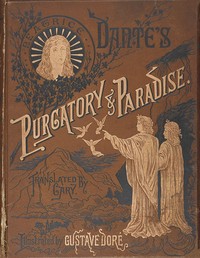
The Divine Comedy by Dante, Illustrated, Purgatory, Complete by Dante Alighieri

(4 User reviews)   444
Dante Alighieri, 1265-1321 Dante Alighieri, 1265-1321
English
Picture this: You're climbing a mountain that circles the entire world. On every ledge, you meet people working through their biggest regrets—the proud learning humility, the envious finding joy in others' success. This is Dante's Purgatory, and it's the most hopeful and human part of his epic journey. Forget fire and brimstone; this is about second chances. Dante walks these terraces with his guide, Virgil, meeting souls who are actively changing, fueled by their own desire to be better. It's a stunning idea: punishment with a clear expiration date and a goal of love. If you've ever wanted to believe people can truly grow, this illustrated climb will stay with you.
Share

Read "The Divine Comedy by Dante, Illustrated, Purgatory, Complete by Dante Alighieri" Online

This book is available in the public domain. Start reading the digital edition below.

START READING FULL BOOK
Instant Access    Mobile Friendly

Book Preview

A short preview of the book’s content is shown below to give you an idea of its style and themes.

Chain’d down and bound, while heaven’s just Lord shall please. So long to tarry motionless outstretch’d.” My knees I stoop’d, and would have spoke; but he, Ere my beginning, by his ear perceiv’d I did him reverence; and “What cause,” said he, “Hath bow’d thee thus!”—“Compunction,” I rejoin’d. “And inward awe of your high dignity.” “Up,” he exclaim’d, “brother! upon thy feet Arise: err not: thy fellow servant I, (Thine and all others’) of one Sovran Power. If thou hast ever mark’d those holy sounds Of gospel truth, ‘nor shall be given ill marriage,’ Thou mayst discern the reasons of my speech. Go thy ways now; and linger here no more. Thy tarrying is a let unto the tears, With which I hasten that whereof thou spak’st. I have on earth a kinswoman; her name Alagia, worthy in herself, so ill Example of our house corrupt her not: And she is all remaineth of me there.” CANTO XX Ill strives the will, ’gainst will more wise that strives His pleasure therefore to mine own preferr’d, I drew the sponge yet thirsty from the wave. Onward I mov’d: he also onward mov’d, Who led me, coasting still, wherever place Along the rock was vacant, as a man Walks near the battlements on narrow wall. For those on th’ other part, who drop by drop Wring out their all-infecting malady, Too closely press the verge. Accurst be thou! Inveterate wolf! whose gorge ingluts more prey, Than every beast beside, yet is not fill’d! So bottomless thy maw!—Ye spheres of heaven! To whom there are, as seems, who attribute All change in mortal state, when is the day Of his appearing, for whom fate reserves To chase her hence? —With wary steps and slow We pass’d; and I attentive to the shades, Whom piteously I heard lament and wail; And, ’midst the wailing, one before us heard Cry out “O blessed Virgin!” as a dame In the sharp pangs of childbed; and “How poor Thou wast,” it added, “witness that low roof Where thou didst lay thy sacred burden down. O good Fabricius! thou didst virtue choose With poverty, before great wealth with vice.” The words so pleas’d me, that desire to know The spirit, from whose lip they seem’d to come, Did draw me onward. Yet it spake the gift Of Nicholas, which on the maidens he Bounteous bestow’d, to save their youthful prime Unblemish’d. “Spirit! who dost speak of deeds So worthy, tell me who thou was,” I said, “And why thou dost with single voice renew Memorial of such praise. That boon vouchsaf’d Haply shall meet reward; if I return To finish the Short pilgrimage of life, Still speeding to its close on restless wing.” “I,” answer’d he, “will tell thee, not for hell, Which thence I look for; but that in thyself Grace so exceeding shines, before thy time Of mortal dissolution. I was root Of that ill plant, whose shade such poison sheds O’er all the Christian land, that seldom thence Good fruit is gather’d. Vengeance soon should come, Had Ghent and Douay, Lille and Bruges power; And vengeance I of heav’n’s great Judge implore. Hugh Capet was I high: from me descend The Philips and the Louis, of whom France Newly is govern’d; born of one, who ply’d The slaughterer’s trade at Paris. When the race Of ancient kings had vanish’d (all save one Wrapt up in sable weeds) within my gripe I found the reins of empire, and such powers Of new acquirement, with full store of friends, That soon the widow’d circlet of the crown...

This is a limited preview. Download the book to read the full content.

After surviving the horrors of Hell, Dante and his guide, the poet Virgil, emerge to see the stars. They find themselves at the foot of Mount Purgatory—a towering island-mountain where souls who died repentant go to purify themselves before entering Heaven. The climb is structured: seven terraces, each dedicated to cleansing one of the seven deadly sins. Dante meets souls doing penance for pride, envy, wrath, sloth, greed, gluttony, and lust. Unlike Hell, there's community and hope here. The souls are working together, singing hymns, and they all know their suffering is temporary. As they climb, Virgil's human wisdom guides Dante, but they also meet new guides who hint at divine love, preparing Dante for what comes next.

Why You Should Read It

This is the heart of The Divine Comedy for me. Hell is fascinating, but Purgatory is moving. It’s about the hard, daily work of becoming a better person. The punishments are poetic and fitting—the proud are bent double under heavy stones, forced to look down and learn humility. The envious have their eyes sewn shut. But it’s never cruel; it’s corrective. You feel the souls' longing for peace. The illustrated edition brings these strange, beautiful landscapes to life in a new way. It helps you visualize the sheer scale of the mountain and the symbolic scenes Dante describes.

Final Verdict

Perfect for anyone who loves big ideas about human nature, second chances, and spectacular world-building. If you found Hell a bit grim, Purgatory is the uplifting counterpoint. The illustrated version is a fantastic entry point, making this 700-year-old poem feel immediate and vivid. It’s a book for thinkers, dreamers, and anyone who believes in the possibility of change.


🔓 Usage Rights

The copyright for this book has expired, making it public property. Preserving history for future generations.

Amanda Rivera
1 month ago

I picked this up late one night and the balance between theory and practice is exceptionally well done. I’d rate this higher if I could.

Jennifer Johnson
5 days ago

Believe the hype, the formatting of this PDF is flawless and easy to read on any device. An unexpectedly enjoyable experience.

Kevin Davis
5 months ago

Once I began reading, the insights offered are both practical and thought-provoking. A perfect companion for a quiet weekend.

Susan Hernandez
1 month ago

From a reader’s standpoint, the writing style is poetic but not overly flowery. I learned so much from this.


5
5 out of 5 (4 User reviews )

Add a Review

Your Rating *
There are no comments for this eBook.
You must log in to post a comment.
Log in

Related eBooks